
On the 10th of September 1917 two young pilots met over the Flanders battlefield. One was nineteen year old 2nd Lt Oliver Charles Pearson, the other was twenty year old Leutnant Werner Voss, flying a prototype of one of the brand new Fokker Triplanes ...
Oliver had left the 70 Sqn airfield near Poperinge at 4.45pm in Sopwith Camel B3787, on an offensive patrol to nearby Houlhulst Wood. Lt Werner Voss was by then commander of 10 Jasta. One of Germanys top fighter aces, he was a natural pilot and aggressive fighter with 43 kills to his credit so far, second only to his friend and competitor Baron Manfred Von Richthofen. Werner had been chosen to test fly Anthony Fokkers prototype only a few days before at the end of August. With aero engines in short supply his was fitted with a 110 hp LeRhône engine engine from a captured RFC Nieuport 17 fighter.


The inexperienced Oliver, on one of his first offensive patrols, would not have stood a chance against Werner Voss. Oliver was shot down somewhere over the Front Line near Langemark, and reported Missing in Action. His remains were lost in that shattered Passchendaele battlefield.
(Although Oliver is credited in several books as his 44th victim, this is open to conjecture. See this thread on the Aerodrome forum for a far more detailed analysis of events that took place.)
Werner Voss only survived Oliver by 13 days, before falling in one of the most famous air battles of the Great War himself.
With much thanks to the Great War Forum for information about Olivers last sortie.
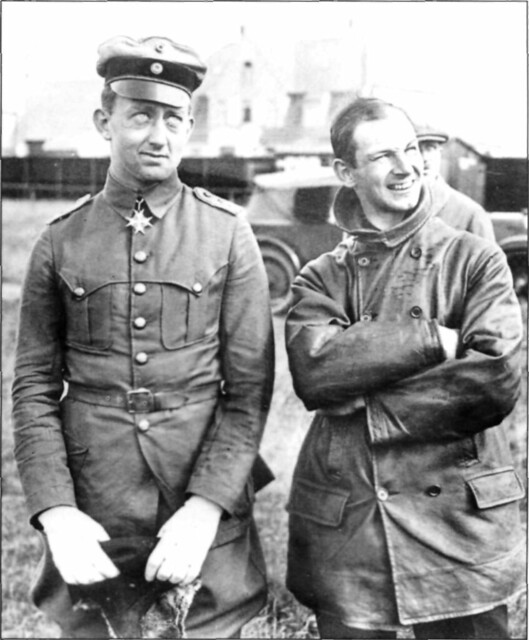
Voss with Anthony Fokker
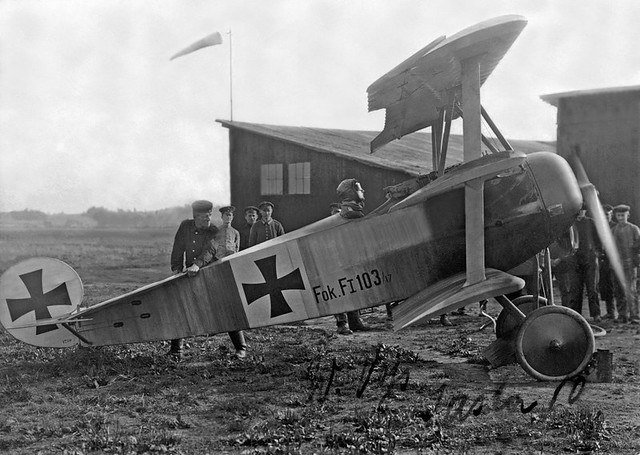
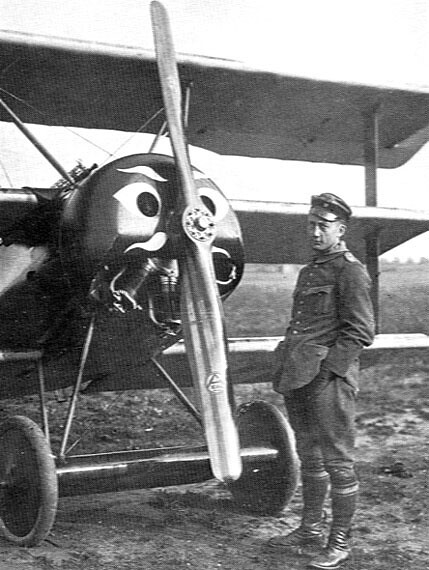
Voss and his Triplane with his distinctive Japanese kite face painted on the Nacelle.
The inexperienced Oliver, on one of his first offensive patrols, would not have stood a chance against Werner Voss. Oliver was shot down somewhere over the Front Line near Langemark, and reported Missing in Action. His remains were lost in that shattered Passchendaele battlefield.
(Although Oliver is credited in several books as his 44th victim, this is open to conjecture. See this thread on the Aerodrome forum for a far more detailed analysis of events that took place.)
Werner Voss only survived Oliver by 13 days, before falling in one of the most famous air battles of the Great War himself.
With much thanks to the Great War Forum for information about Olivers last sortie.
Comments
This is a fascinating blog. I am researching the chronology of photos taken of Lt Werner Voss during the period that he was flying Fokker FI 103/17. I have a photo of Voss with a captured Clerget 9b which I believe was taken on the 10th September 1917. Whilst this will probably always remain as speculation there is strong circumstantial evidence that it was from one of the two 70sqn Camels shot down that day. Please email me if you would like a copy.
Mike.
I replied to your email but the address mentioned no-reply. Did you receive my emails? If not can you reply with a valid address please.
Thanks,
Langdon